Peak Season Yard Checklist: What to Watch, Gate to Dock
Peak season is the best time to see where your yard loses time. Use this gate-to-dock checklist to observe now and plan 2027 with real evidence.

Peak season is the one stretch of the year when your yard runs at full volume with the least room for guesswork. That makes it the best time to see where time and money leak, and the hardest thing to reconstruct from memory in January.
Here is a gate-to-dock checklist you can use while peak is happening, so what you see now becomes evidence for your 2027 plan.
Key takeaways
- A peak season yard checklist follows the freight flow in order, from gate to departure, and records what slows the team down at each stop.
- Gate problems and yard problems feed each other. In Aviro360’s 2025 research of 367 U.S. logistics professionals, 51% reported gate blind spots and 43% reported location and readiness blind spots.
- For every observation, write one line: where it happened, what was going on around it, how long it lasted, and how the team found out.
- Questions nobody could answer are as useful as the ones you can. They mark where the yard has no visibility at all.
- New yard technology doesn’t have to mean a major implementation project. At sites ready with power and connectivity, Aviro360 gate automation can typically be installed in a few days, while its third-generation mobile inventory hardware was redesigned and miniaturized for installation in a single day. That shorter deployment window makes it possible to improve visibility even during high-volume periods, like peak, when operations have little room for disruption.
What is a peak season yard checklist?
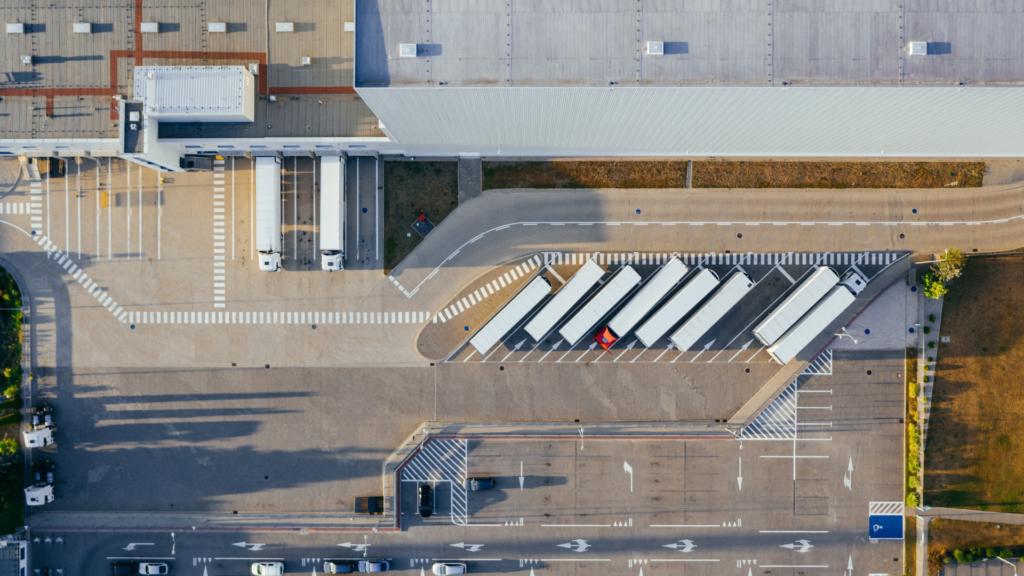
A peak season yard checklist is a structured way to observe a yard under full load. Instead of reviewing the season in general terms afterward, you follow a unit through the flow (gate in, yard, door, gate out) and note where information was late, wrong, or missing.
The one-line format matters because the context is what makes a note useful. “Gate backed up Tuesday night” is a symptom. “Gate backed up Tuesday night, 40 minutes after a late train, because three entries were being re-keyed by hand” is something you can plan around.
1. At the gate
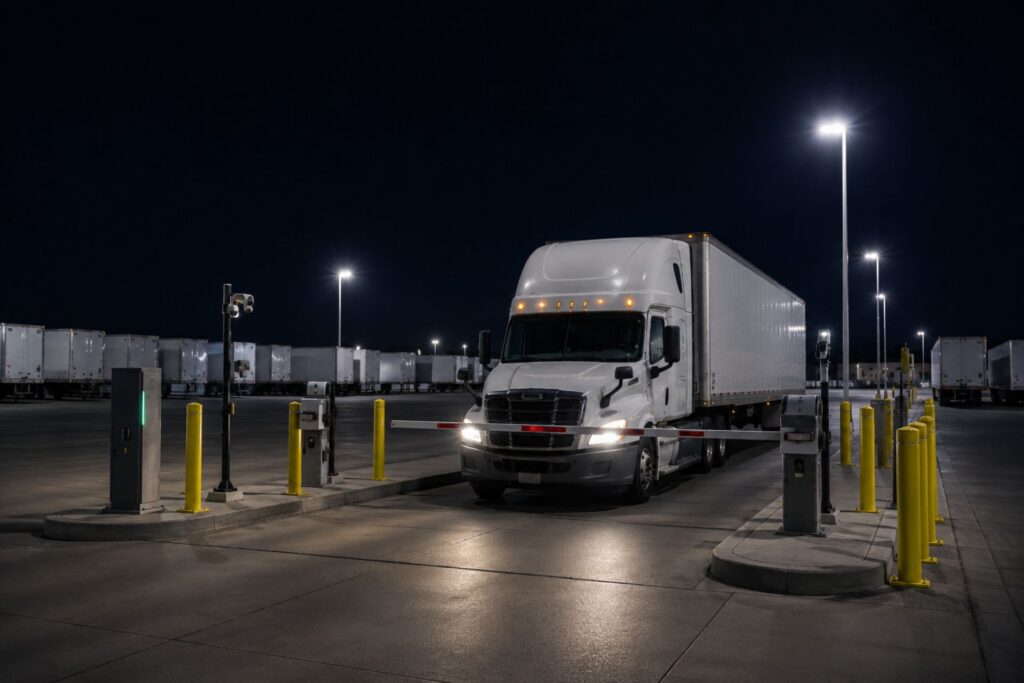
Everything downstream starts here. If entry data is late or wrong, location data inherits the problem. Aviro360’s research found that gate blind spots and yard blind spots reinforce each other: imperfect entry data makes location data less trustworthy, which means more manual verification, slower execution, and more congestion. Watch for:
- Time from arrival to entry by shift, and how long the queue got at its worst
- Manual steps in a check-in, such as paperwork, radio calls, and re-keying into more than one system
- What happens when a driver arrives between shifts or after the gate closes
- How often an entry gets corrected after the fact
- Whether unfamiliar carriers were validated against site rules or waved through to keep the line moving
If those notes pile up, they point toward gate automation. Aviro360 Gate uses computer vision to capture plates, containers and chassis numbers, and seals on the way in and out, checks each against the site’s own rules, and logs it with images and timestamps. The process runs the same way at 2 am as at 2 pm, and exceptions go to a remote contact instead of stopping the line.
2. Inside the yard
Once a unit is inside, the question is whether anyone knows where it is without going to look. A manual count of a 6,000-container yard takes roughly four hours, and manual counts are almost always about 75% accurate. During peak, equipment keeps moving the whole time the count is underway. Watch for:
- Equipment searches: how many, how long, and who got pulled off other work to do them
- Spots someone re-verified that the system already showed as confirmed
- Radio calls asking where something is
- Misroutes and rehandles
- The age of your last full count compared with how many moves have happened since
This is the case for continuous inventory. Aviro360 mobile inventory units mount to yard hostlers or any vehicle already touring the site, so inventory updates as equipment moves and nothing on the ground has to be marked. The same 6,000-container yard takes under an hour at 99% accuracy once calibrated. Inter Metro Properties reports saving about five minutes per asset with automated yard checks.
3. Cold chain and time-sensitive loads
Some freight can’t wait for the next count. For food and beverage and other temperature-sensitive loads, the cost of not knowing is the product itself. ATRI puts refrigerated drivers at 56.2% of stops detained, the highest of any segment. Watch for:
- Time between arrival and door for reefers and other time-sensitive loads
- How the team learns a unit is aging: from telematics, or from someone remembering to check
- Near misses, meaning loads caught late, or not caught
- Cold chain handoffs that depended on a person keeping track
Aviro360 can integrate with trailer telematics to help teams identify time-sensitive equipment and loads that are approaching dwell thresholds, giving operators more time to act before delays create product or service issues.
4. Docks and departures
Outbound deserves as much attention as inbound, because the gate is also where assets leave attached to trucks that don’t own them. Watch for:
- Mismatches between what left the site and what the record says left
- Equipment sitting at a door for a pickup nobody saw coming
- Disputes you couldn’t settle because there was no timestamped record
- Time spent reconstructing a move after the fact
Every gate event Aviro360 captures comes with images and times, so a disagreement about what left, and when, gets settled from the record instead of memory.
5. Where systems hand off
Look at where information crosses between systems and people: a TMS appointment, a YMS entry, a WMS dock assignment, a radio call. Note the re-keying, the gaps between the record and the yard, and who reconciles them and when.
Your systems of record are doing their job. They know what they are told, and the question is how quickly and accurately the physical yard tells them. Aviro360 works alongside them as a system of reality, capturing what is physically happening and making it available to the systems and people that need it.
From notes to a 2027 plan
When peak settles down, sort what you logged into three groups:
- Problems tied to a specific disruption that has since passed. These are probably seasonal.
- Problems that repeat no matter what was going on around them. These are probably systemic.
- Questions nobody could answer, like how long something sat or where it went. These are visibility gaps.
The third group is easy to miss. A problem you can measure shows up in the log. A problem you can’t measure shows up as a blank.
If peak is already exposing signs of yard blindness- gaps between what your systems say and what is actually happening in the yard- you don’t necessarily need to wait for the next stress test to address it. At sites ready with power and connectivity, gate automation can typically be installed in two to three days, and inventory hardware can be installed and running in a single day. Where existing cameras, gate arms, or fencing meet requirements, they can be reused rather than replaced. That means a visibility problem identified during peak can become a Q1 priority without turning implementation into another major disruption for the operation.
FAQ
- What should a peak season yard checklist include?
It should follow the flow from gate to departure: gate entry and exit, equipment location and inventory, cold chain and time-sensitive loads, docks and outbound, and the points where information passes between systems and teams. For each stop, note what happened, what was going on around it, how long it lasted, and how the team found out.
- Why walk the yard in order from gate to dock?
Problems travel downstream. Late or wrong entry data makes location data less reliable, which leads to more searching and manual verification. Observing in order shows where a problem starts, not just where it is felt.
- How do I use peak season observations to plan for 2027?
Sort your notes into problems tied to a passing disruption, problems that repeated regardless of conditions, and questions nobody could answer. The first group may call for temporary fixes. The second and third point to structural gaps worth budgeting for.
- How does gate automation use computer vision?
Cameras at the gate capture plates, container and chassis numbers, logos, and seals as vehicles enter and exit. The system checks each entry against the site’s rules and logs it with images and timestamps, so check-in does not depend on paperwork or manual re-keying.
- Does Aviro360 replace a YMS, TMS, or WMS?
No. Aviro360 is built to work alongside those systems. It captures what is physically happening in the yard and makes that data available to the systems a site already uses.
- Can yard visibility be in place before next peak season?
Yes, and depending on the deployment, much sooner. At sites ready with power and connectivity, gate automation can typically be installed in two to three days, while Aviro360’s third-generation mobile inventory hardware can be installed in a single day. Data capture begins almost immediately. From there, the Aviro360 team fine-tunes the deployment around how the site actually operates, from traffic patterns and vehicle speed to camera positioning and site conditions, and works with the customer on integrations and workflows.
If you’d like a second set of eyes on what you’re seeing this peak, book a call with the Aviro360 team and we’ll walk through your notes together. Book a call here.