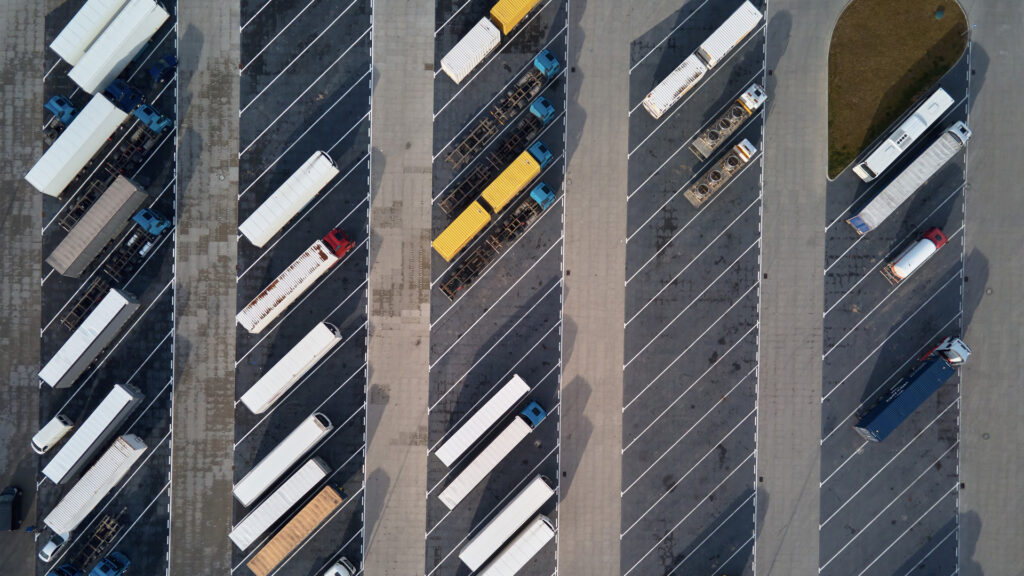
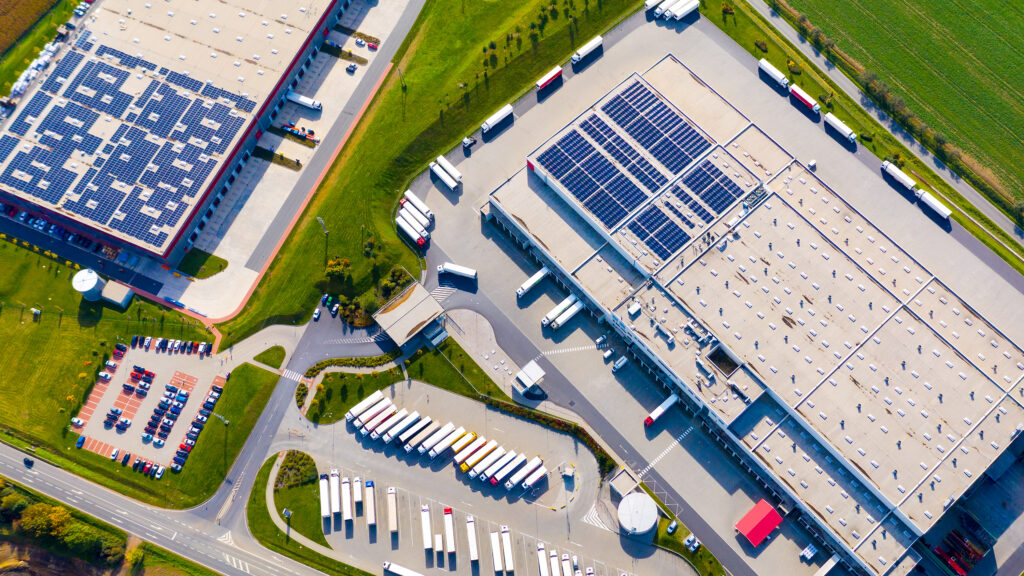
The High Cost of Yard Blindness
Yard blindness creates costly inefficiencies, and Aviro360 delivers the visibility to solve them.

Introduction: The Cost of What You Can’t See
In every supply chain boardroom today, visibility is the word of the moment. Companies are investing heavily in real-time tracking, predictive analytics, and integrated planning systems. Yet one of the most persistent, and expensive, gaps in logistics happens not across oceans or highways, but inside the yard itself.
This phenomenon, known as yard blindness, quietly drains productivity, capital, and customer trust. It’s the operational equivalent of steering a ship through fog: you may know your destination, but uncertainty about what’s directly ahead slows everything down.
At Aviro360, we see yard blindness not just as a persistent pain point, but as an opportunity to fundamentally redefine how yards operate.
What Is Yard Blindness?
At its core, yard blindness is the inability to know the real-time status, location, and condition of assets within an intermodal, industrial, or logistics yard.
It manifests in ways that are strikingly familiar across the logistics sector:
- Containers or railcars are somewhere in the yard, but no one knows exactly where
- Equipment availability and utilization rely on guesswork
- Check-in/check-out processes are manual and error-prone
- Yard maps exist, but they’re outdated the moment they’re printed
- Operators depend on tribal knowledge rather than visibility
The result? Delays, rehandles, safety risks, and millions in avoidable operating costs, all caused by the simple fact that most yards still operate in a visibility vacuum.
Why Yard Blindness Persists
Despite advancements across the broader supply chain, the yard has historically been an afterthought for digitalization efforts. There are several reasons why:
1. Complex Physical Environments
Yards are dynamic, complex, and constantly shifting. Assets move frequently, operators intervene manually, and environmental factors, from weather to lighting, create challenging conditions for visibility, demanding systems that can reliably capture and interpret detail despite real-world variability.
2. Technology That Doesn’t Scale
Many tracking solutions struggle to scale in real yard environments. They depend on fixed infrastructure, manual setup, or asset tagging, driving up cost, increasing complexity, and limiting coverage across large or distributed yards. As conditions change, these systems become brittle, requiring constant maintenance to remain reliable.
3. Fragmented Stakeholder Needs
Yard performance matters to many stakeholders at once, but they experience it differently. Frontline teams need clarity to complete tasks safely and efficiently. Leaders need confidence that operations are accurate, compliant, and under control. Customers expect real-time updates and predictability. Drivers need fast, frictionless turns. When visibility isn’t shared or aligned, each group compensates in isolation, creating fragmentation, delays, and risk.
4. The Illusion of “Good Enough”
When yards rely on manual checks, radio calls, and tribal knowledge, inefficiency becomes embedded in daily routines. Lost time is spread across small decisions, workarounds, and rehandles, making the true cost difficult to see, let alone quantify.
The True Impact: Where Yard Blindness Hits Hardest
Executives often underestimate the scale of yard-related losses because they are distributed, hidden in labor inefficiencies, or masked by downstream delays.
Operational Losses
- Excessive rehandles
- Inefficient equipment movements across the yard
- Misaligned labor scheduling
- Slow turn times
Financial Impact
- Higher demurrage and detention costs
- Underutilized equipment and capacity
- Increased maintenance from unnecessary wear
Customer Experience
- Late shipments
- Poor carrier experience at the gate
- Unreliable ETAs and handoffs
Safety and Compliance
Blind spots in asset movement increase the likelihood of incident, injury, or regulatory exposure.
When Yard Blindness Becomes a Daily Tax on Operations
In most yards, the cost of yard blindness doesn’t show up as a single failure, it shows up as routine work that everyone quietly accepts.
One of the most common examples is the manual yard check. Before automated visibility, teams at large terminal operations were spending hours each shift driving the yard to locate containers the system already claimed were “on site.” Inventory records existed, but they couldn’t be trusted at the level operations actually needed, exact location, accessibility, and condition.
As one operations leader explained, “If you know where the asset you’re looking for is, you’re saving time, money, fuel, and you’re being more environmentally conscious.”
Without that certainty, the downstream effects compounded quickly: unnecessary container moves, excess fuel burn, labor pulled away from safety and maintenance, gate congestion caused by misplaced assets, and longer dwell times that frustrated both drivers and customers.
When real-time, automated inventory capture was introduced, those manual yard checks were nearly eliminated, reduced by more than 99%. The impact wasn’t just speed or accuracy; it was trust. Operators could finally rely on what the system showed them, and the yard could be managed proactively instead of reactively.
That is what solving yard blindness looks like in practice: not doing more work faster, but removing work that never should have existed in the first place.
Why Yard Blindness Matters More Today than Ever
The last decade has transformed what customers expect from supply chain partners. Transparency is now a competitive differentiator, not a luxury.
But visibility at the macro level does little good when the micro-environment of the yard is opaque. As freight volumes rise, labor availability tightens, and customers demand precision, the yard can no longer be the black box of logistics.
This is the moment when the industry needs a new model.
Aviro360: Built to Solve Yard Blindness at the Source
Aviro360 was built by people who understand yard operations at their most demanding—where conditions change constantly, decisions must be made in real time, and visibility can’t be theoretical. Our mission is simple:
Turn the yard from an operational bottleneck into a connected, intelligent, and predictable environment.
What differentiates Aviro360 isn’t just technology, it’s how that technology is designed, deployed, and used in the real world. Our approach is grounded in three core pillars:
1. Operational-First Innovation
Aviro360 is designed for live yards, not static diagrams. Solutions are built to perform in motion, under pressure, and at scale, supporting how work actually gets done rather than forcing operations to adapt to the system.
2. Edge-to-Cloud Visibility
Aviro360 delivers real-time asset intelligence through infrastructure-light deployment that scales across diverse yard environments. Activity is captured as it happens, creating a reliable operational picture without manual intervention or fixed constraints.
3. Decision Intelligence, Not Just Data
Visibility alone doesn’t cure yard blindness, actionable insight do. Aviro360 interprets movement and location signals to drive optimized workflows, predictive alerts, and operational clarity that teams can act on with confidence.
What Solving Yard Blindness Really Unlocks
Organizations that solve yard blindness don’t just operate more efficiently, they fundamentally change how work gets done across the yard and how the yard connects to the broader supply chain.
✓ One Operational View That Supports Multiple Needs
When yard blindness is removed, a single operational picture can serve many needs at once—without forcing tradeoffs. Frontline teams gain the clarity to execute work safely and efficiently. Leaders gain confidence that operations are accurate, controlled, and compliant. Customers and partners receive timely, reliable updates grounded in what’s actually happening on the ground.
✓ Predictable, Planned Daily Operations
Real-time visibility enables yards to move from reactive decision-making to planned execution. Unnecessary rehandles decline, turn times shorten, and labor can be scheduled and deployed based on current conditions rather than assumptions or manual checks.
✓ Throughput Without Expanding Footprint
Clear visibility into asset location and movement unlocks capacity within the yard itself. Organizations move more freight through the same space by reducing search, congestion, and unplanned moves—without adding acreage, equipment, or headcount.
✓ Safer, More Controlled Working Environments
Improved visibility reduces blind movements, congestion, and conflicting traffic patterns. With fewer unplanned interactions and clearer flow, yards become safer, more controlled environments for people and equipment across all shifts.
✓ Confident Customers, Drivers, and Partners
Accurate, real-time information supports reliable ETAs, faster turns, and fewer surprises. The result is a yard that drivers prefer and customers trust, because performance is consistent, predictable, and transparent.
Thought Leadership Outlook: The Future Yard Is Autonomous-Ready
Solving yard blindness is not the finish line, it’s the foundation for what comes next.
Across the industry, yards are adopting different levels of automation based on their operating environment, risk profile, and business needs. In some cases, that means fully automated checkpoints or autonomous inventory capture. In others, it means human-led operations supported by intelligent systems that reduce manual work and improve decision-making.
What all of these models share is a common requirement: accurate, real-time visibility into what’s happening across the yard.
Without reliable visibility, automation introduces risk. With it, automation becomes adaptable, supporting everything from human-in-the-loop workflows to highly autonomous operations as conditions allow.
The organizations that address yard blindness today aren’t committing to a single future model. They’re building the visibility foundation that lets them adopt automation at the pace, and depth, that makes sense for their operation.
Conclusion: Seeing the Yard Clearly, Every Time
Yard blindness has long been a hidden constraint on yard performance, masking inefficiencies, increasing risk, and limiting how confidently operations can scale. But as real-time visibility becomes practical in even the most complex yard environments, that constraint is finally being removed.
What was once a black box is becoming a connected, intelligence-driven operation, one where decisions are grounded in what’s actually happening on the ground, not assumptions or manual workarounds. Visibility doesn’t replace experience or judgment; it strengthens both by giving teams a shared, accurate understanding of the yard in motion.
For logistics leaders focused on improving performance today while preparing for what comes next, the starting point is clear:
What would change in your yard if visibility were consistent, reliable, and shared, every shift, every day?