Why Computer Vision Outperforms Traditional Yard Tracking
Computer vision captures what’s actually happening in the yard, turning physical operations into real-time, usable data.

Across modern supply chains, visibility has improved dramatically. Transportation management systems track freight across highways. Warehouse systems monitor inventory movements in real time. Control towers promise end-to-end insight across global logistics networks.
Yet one environment still struggles to generate reliable operational signals.
The yard.
The yard has remained one of the least instrumented parts of the supply chain, making it difficult to capture and act on real-time operational data.
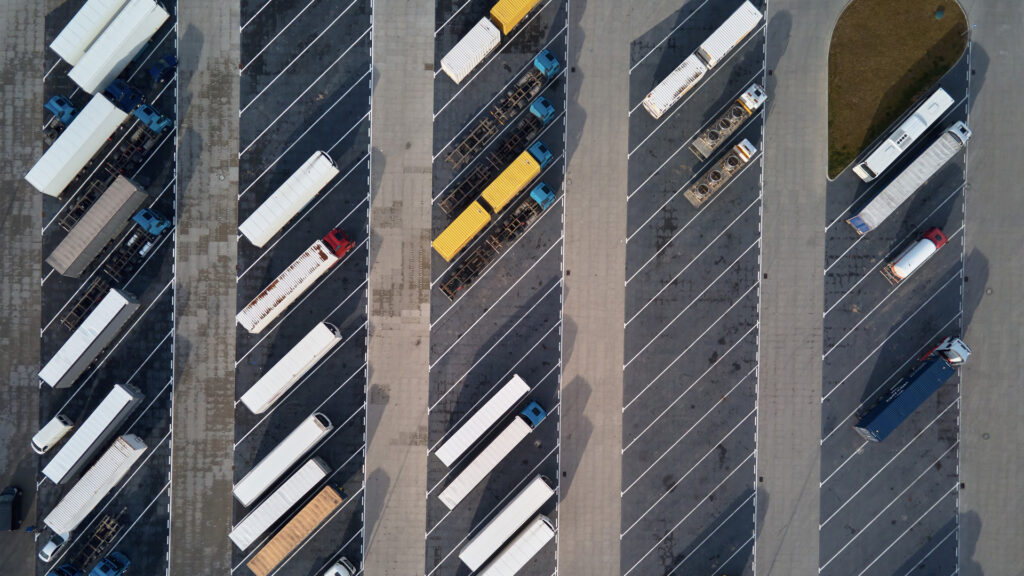
Between the highway and the warehouse sits one of the most operationally complex environments in logistics. Trucks arrive continuously. Containers and trailers move across large facilities. Equipment is staged, repositioned, and dispatched throughout the day. Despite the pace and scale of these operations, many yards still rely on manual processes or fragmented technologies to capture information about what is happening inside the facility.
The challenge is not simply collecting data. It is capturing accurate operational information at the speed the yard moves.
For years, operators have experimented with different technologies to address this problem. Each has provided partial improvements. But most approaches struggle to generate the continuous, real-time signals required to coordinate complex yard operations.
Computer vision combined with modern AI is now making it possible to capture and interpret yard activity reliably and at operational speed.
Why Traditional Yard Tracking Approaches Struggle
Yard operations have historically relied on a combination of manual processes and specialized technologies to track equipment movement and capture operational information.
While these approaches can provide useful data in certain environments, they often fall short in large, open logistics facilities where equipment is constantly arriving, moving, and departing.
Manual Data Capture
Many yards still rely heavily on manual processes to record equipment information.
Drivers check in at the gate with paperwork. Gate staff record container or trailer numbers. Information is entered into operational systems after equipment has already entered the yard.
These processes introduce delays and opportunities for human error. By the time information reaches dispatch teams or yard operators, the equipment may already be moving through the facility.
Manual updates lag behind actual movement, forcing teams to work from incomplete or outdated information.
The result is a familiar operational pattern: teams reacting to events instead of coordinating around them.
RFID and Asset Tagging
RFID and other asset tagging systems were introduced to automate equipment identification. In controlled environments, such as manufacturing facilities or private fleets where assets are owned and consistently maintained, these systems can work well.
Logistics yards present a more complex challenge.
Equipment arriving at a facility often belongs to multiple carriers, leasing companies, and shippers. Containers, trailers, and chassis may visit the yard only once before moving on to another location. RFID tags must be programmed, installed, and maintained, which requires time and operational effort.
When equipment may only appear once or twice at a facility, that investment can be difficult to justify. As a result, tagging coverage becomes inconsistent and tracking reliability begins to break down.
OCR-Based Capture Systems
Optical Character Recognition (OCR) systems have also been deployed to automate equipment identification at the gate.
OCR technology reads characters from images, extracting container numbers, license plates, or trailer IDs. While this can be useful for capturing specific identifiers, OCR systems typically focus on isolated data points rather than the broader operational context.
In real-world logistics environments, equipment markings can be obstructed, weather conditions can reduce visibility, and equipment itself may be damaged or dirty. These conditions can reduce accuracy or require additional manual verification. More importantly, OCR alone captures text. It does not interpret the broader environment or the operational events happening within it.
The Real Constraint: Economics at Scale
Each of these technologies captures pieces of the operational picture. But few produce a continuous, reliable signal about what is happening across the yard in real time.
The challenge is not that these technologies lack capability. It is that the economics of the yard do not support them at scale.
Systems that depend on tagging, manual input, or pre-configuration require ongoing labor, coordination, and upkeep. As operations grow, that effort grows with them—often faster than the operation itself. In high-volume, high-variability environments, maintaining that level of control becomes impractical.
When Systems Can’t See, People Compensate
When tracking systems fail to capture reliable data, operations do not stop.
Teams compensate.
Phone calls, radio traffic, manual checks, and repeated verification steps become part of the workflow. These workarounds allow the operation to continue, but they introduce latency into every decision.
Instead of acting on real-time information, teams are often working with partial or delayed data. This leads to increased dwell time, unnecessary moves, and constant operational firefighting.
How Computer Vision Changes the Model
Computer vision approaches the problem from a different perspective.
Instead of relying on manual input, asset tags, or isolated character recognition, computer vision systems analyze images captured by cameras across the facility and interpret what those images represent.
Computer vision systems combined with modern AI models do more than simply read identifiers. They can interpret the operating environment as a whole.
This allows software to identify and classify equipment automatically while capturing operational events as they occur.
Computer vision models can recognize and interpret a wide range of operational details, including:
• container and trailer identification numbers
• license plates and chassis identifiers
• carrier logos and equipment markings
• seal status and equipment condition
• vehicle movement and arrival events
In busy yard environments, it is common for identifiers to be partially obscured, damaged, or difficult to read due to weather, dirt, lighting conditions, or equipment wear.
Modern computer vision systems address this by combining visual signals with operational context. Instead of returning an “unknown” result when a perfect match cannot be identified, the system can narrow the possibilities and present the most likely match for verification.
In many cases, contextual signals such as carrier markings, appointment data, or scheduled arrivals can help narrow the possibilities even further, allowing operators to confirm the correct asset with minimal delay.
In many cases, these systems can see more than a human operator. Rather than relying on a single identifier, they combine multiple signals to determine what is most likely happening in the yard.
By interpreting these visual signals, the system converts physical activity inside the yard into structured operational data that can be shared across operational systems. Cameras that once served only as passive recording devices become operational sensors that continuously generate signals about what is happening across the facility.
Designed for Real Logistics Environments
One of the reasons computer vision is becoming more effective in logistics operations is the scale of training data available to modern models.
Computer vision systems deployed in large industrial environments can be trained on millions of operational images captured across diverse facilities. These images include variations in lighting, weather, equipment condition, and camera angles that reflect the realities of day-to-day yard operations.
As models process more events, they improve their ability to recognize equipment and interpret complex scenarios. Instead of relying on ideal conditions, modern computer vision systems are designed to operate in the messy, unpredictable environments that define logistics yards.
From Data Capture to Operational Awareness
The real value of computer vision in yard operations is not simply faster data capture. It is the ability to generate continuous operational awareness across the facility.
As these systems scale, they transform the yard from a largely unmonitored environment into a measurable and connected operating system.
When those signals are available in real time, coordination improves across the yard. Dispatch teams know when equipment arrives, yard operators can identify where assets are located, and security teams have a verifiable record of movement across the facility.
Instead of reacting to incomplete information, teams can make decisions based on a shared and current view of operations.
Bringing Computer Vision to Yard Operations
Platforms such as Aviro360 are applying computer vision to automate gate processing and monitor equipment movement across large logistics facilities. By combining fixed capture points at the gate with mobile visibility inside the yard, these systems can generate continuous operational signals about what is happening across the facility.
Instead of relying on manual updates or isolated capture points, operators gain a shared and current view of yard activity that can be integrated with the transportation, warehouse, and dispatch systems that coordinate freight movement across the broader network.
The Future of Yard Visibility
For decades, logistics technology focused on improving visibility across transportation networks and inside warehouse operations. The yard remained one of the most difficult environments to digitize.
Today, advances in computer vision and AI are closing that gap.
By turning visual signals into structured operational data that can be shared across operational systems, computer vision allows logistics facilities to capture what is happening across the yard in real time and coordinate those events across the broader supply chain.
As supply chains continue to modernize, the ability to interpret and respond to events inside the yard will become increasingly important.
Because in modern logistics operations, visibility is not just about knowing where freight is moving across the network.
It is about understanding what is happening on the ground, at the moment it happens.